"Build in Canada first. Partner with trusted allies. Buy off-the-shelf only when necessary – and always with benefits flowing back to domestic industry."
Canada's new Defence Industrial Strategy, backed by $81.8bn in investment, establishes a clear hierarchy for defence procurement and a fundamental shift. Where defence procurement once relied on foreign suppliers reinvesting, Canada now prioritises building domestic capability first – with partnerships structured to deepen Canadian control rather than simply deliver economic offsets.
The "partner" pillar represents a significant opportunity for the UK. This week, Prime Ministers Mark Carney and Keir Starmer met for further defence discussions, building on momentum from last year. The leaders said ties “are closer than ever,” underpinned by deep cooperation on trade and defence, against an increasingly volatile security backdrop.
Canada is now on track to reach its 2% NATO spending target this spring, nearly a decade ahead of schedule, signalling the scale and pace of its defence transformation. The country is explicit about diversification. While maintaining its close relationship with the United States, Canada is exploring new defence-industrial relationships, including a new comprehensive partnership with the European Union and the United Kingdom.
For UK policymakers and industry, the question is: how does the UK position itself as Canada's partner of choice in this new era?
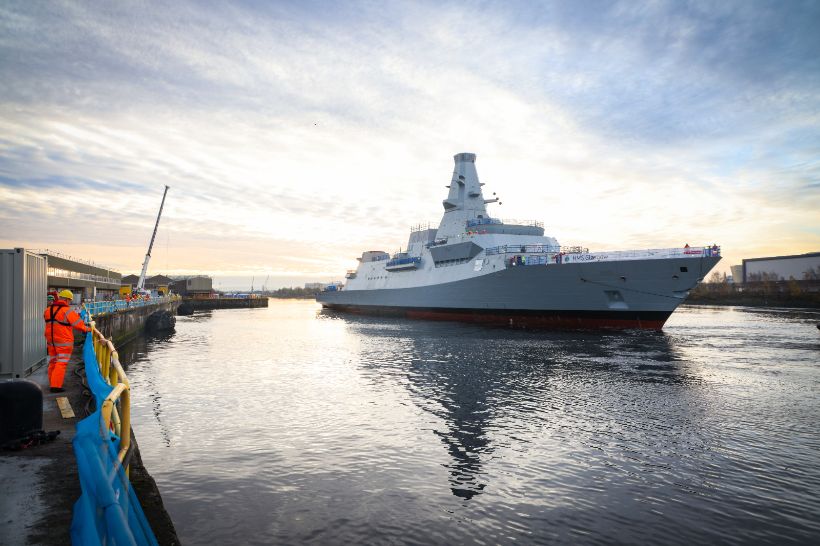 BAE Systems’ Type 26 frigate. Credit Ministry of Defence
Big ticket acquisitions
While both countries have pledged to build on their defence ties with a NATO-first stance at the core of their defence strategies, the Canada-UK relationship is already underpinned by tangible procurement, illustrating further potential strategically and operationally.
Canada’s procurement from the UK has often involved big-ticket, strategic platforms, such as the River-class destroyers using BAE Systems’ Type 26 frigate design or Babcock’s maintenance expertise for the Victoria-class submarines. Multi-decade relationships such as this have seen UK primes work alongside Canadian industry to build domestic capacity while delivering capability. This reflects Canada’s approach to importing certain advanced capabilities where domestic options are limited.
Operating on the same or compatible systems enhances interoperability in joint missions - for example, through common design features and systems between Canadian and Royal Navy ships. Looking ahead, the UK is reportedly open to Canada joining the Global Combat Air Programme (GCAP), a sixth-generation fighter initiative led by the UK, Italy, and Japan.
Under Canada's new framework, foreign contractors must do more direct work with Canadian-controlled firms and enable greater Canadian control over long-term operation and maintenance. Importantly, 'partner' is not a fallback when domestic capacity falls short, but a pathway to accelerate outcomes with allies. The UK's emphasis on technology transfer, IP sharing, and industrial participation aligns with Canada's hierarchy, where partnerships must “flow back into domestic industry and ensure Canadian sovereign control.”
Partnerships, not dependency
Strategic autonomy through partnerships ultimately depends on infrastructure. Canada can acquire platforms from allies, but long-term sovereign control requires the infrastructure to operate, sustain, and adapt them independently. From naval bases and airfields to digital command centres and energy systems, infrastructure is the invisible enabler that allows platforms to operate, forces to deploy, and missions to succeed.
Canada’s geography makes this imperative. As its 2024 defence strategy notes, “We must be able to operate in the North, in all seasons, and in all conditions.” This demands resilient, remote-ready infrastructure designed for all environments.
Canada is investing in its submarine fleet to strengthen deterrence and maritime control across its three coasts. The UK is simultaneously expanding its submarine enterprise - including plans to build up to 12 SSN-AUKUS submarines – driving significant demand for shipbuilding, maintenance, and nuclear fuel facilities.
That mix of current build-up and longstanding experience with the Astute and Vanguard programmes positions the UK to offer valuable support. Realising this potential, however, requires partners who can navigate and work effectively within Canada’s build‑partner‑buy framework.
The role of integrators
In both Canada and the UK, the complexity of modern defence demands multi-disciplinary expertise. This is where integrators bring unique value: aligning strategy, platforms, systems, and infrastructure – whether it’s designing remote-ready bases in the Arctic or integrating digital command systems into legacy platforms. Their role extends beyond initial delivery, supporting decades of in-service support.
For UK firms and government, navigating Canada's build-partner-buy framework will depend on integrators that understand both jurisdictions. Delivering submarine maintenance infrastructure, for instance, could require coordinating UK submarine design and sustainment expertise with Canadian regulatory, industrial and sovereign requirements. Integrators can ensure knowledge transfer throughout the project lifecycle, supporting Canadian-led operations.
Additionally, delivery partners can play a critical role in aligning defence infrastructure with broader national goals, such as energy security, and regional economic and industrial development, particularly given the tariffed environment Canada finds itself in.
A moment of opportunity
Canada and the UK are aligned not just in values, but in vision. As both nations invest in defence, infrastructure and integration will be the levers that determine success.
Canada's build-partner-buy approach establishes clear priorities: build first where possible, partner where it adds value, and ensure all arrangements strengthen Canadian sovereignty. For the UK, this creates an opportunity where there is genuine collaboration in submarine infrastructure, naval interoperability, and complex systems integration.
This is a moment to reinforce a historic partnership, building the infrastructure foundation that enables both nations' sovereign capabilities.
ABOUT THE AUTHORS
 L-R: David Clark and Antonella Tomaro
David Clark is AtkinsRealis’ Global Head of Defence, delivering mission-focussed solutions for government and industry customers in the UK, US, Canada, Australia and the Middle East. Since joining in 2002, he has held several senior roles leading strategy and growth. David was previously with the UK Ministry of Defence's research and development arm, Defence Science and Technology Laboratory (DSTL). He has a Bachelor’s degree in electronic engineering and Master’s in Navigation Technology from the University of Nottingham.
Antonella Tomaro is Vice President, Defence – Canada at AtkinsRéalis, where she leads national strategy, growth and client engagement across the defence portfolio. A civil engineer by background, she brings extensive experience in delivering large, multidisciplinary and complex infrastructure programmes in Canada and internationally. Antonella previously held senior leadership roles at Wood in Canada, including Vice President of Growth & Development. She holds a Master’s degree in Structural Engineering.