In recent months, our military’s size and capability have featured prominently in our national discourse. What has largely gone unmentioned is the job prospects many of our servicemen and women face once they leave the Armed Forces and return to civilian life. It’s a topic no less worthy of discussion: not only because ex-service personnel are an asset to any organisation, but because our veterans are an embodiment of public service and sacrifice. They have already made an immeasurable contribution to society and still have a vital role to play in our country’s workforce and in helping boost Britain’s economy.
The barriers ex-forces personnel face when re-entering the civilian workforce are well documented. Many experience underemployment, with just over half (52.5%) having taken a civilian job at a lower experience or skill level than their last role in the military. Despite possessing transferable skills, many veterans struggle to find suitable civilian employment, citing patchy physical or mental health services, a lack of understanding from civilian employers, or insufficient career support.
The consequences of this are that veterans suffer disproportionately from financial insecurity and other associated issues: a 2024 study found that over a quarter (28%) of veterans regularly go without essentials such as medical or dental care. A similar proportion (27%) say the food they buy doesn’t last and they lack the money to buy more, nearly double the equivalent figure among people who have never served in the Armed Forces (14%).
Action by the government to address these issues, such as the Veterans Strategy published this year - including its commitments on employment and career transition support – is very welcome. But business also needs to step up and play its part.
Providing opportunities for veterans is something Serco is passionate about and well placed to do. We are a major partner to the Ministry of Defence (MoD) and Armed Forces, entrusted with delivering critical defence programmes and services in the UK and in allied nations around the world: in the US, for instance, we help support tens of thousands of veterans into employment every year. In our own ranks, veterans comprise 36% of our global defence workforce and make an invaluable contribution to Serco.
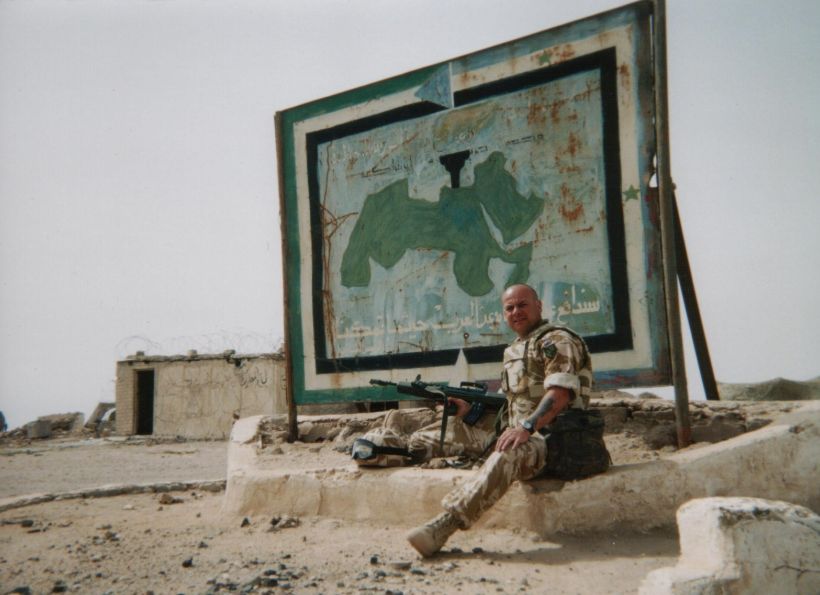 Kez, who left the army in 2006 and joined Serco in 2008 as a Health and Safety Adviser, is now Serco's Director of Health, Safety, Environment and Quality
Among the veterans here is Kez, who left the army in 2006 and joined Serco in 2008 as a Health and Safety Adviser. He's now our Director of Health, Safety, Environment and Quality. I have asked him to share his experience of leaving the military and what support for veterans should look like, and this is what he told me:
“I spent 22 years in the Army, rising to the rank of Warrant Officer. Like many people who serve, it wasn’t just a job – it was a way of life. It gave me structure, purpose, and a strong sense of identity, as well as the opportunity to develop skills and experiences that stay with you for life.
“When I made the decision to leave, I knew it would be a big change, but I don’t think you ever fully appreciate just how much until you go through it. You’re suddenly faced with lots of questions all at once — what job you’re going to do, where you’re going to live, how you’re going to rebuild your life outside the Armed Forces. You lose that built-in support system and stability, and it can feel like you’re starting again from scratch.
“I’d had a certain quality of life in the Army, and I was unsure how I was going to maintain that. Like many others leaving the forces, there’s a real sense of uncertainty – civvy street doesn’t come with the same structure, and you have to find your own way.
“I was fortunate that a friend told me about an opportunity at Serco for a Health and Safety Adviser role. In the Army, I had also worked in health and safety, so it felt like something that could translate well. I applied, was successful, and joined in 2008.
“From the start, Serco saw something in me and gave me the chance to build a second career. That’s made all the difference. Over the years, I’ve been supported with training, mentoring and development opportunities that have helped me grow and progress.
“I’ve been able to take the skills I developed in the Army and apply them in a completely new environment. But just as importantly, I’ve learned new skills along the way and developed in ways I wouldn’t have expected when I first left the forces.
“What really stands out to me is the support. It’s not just about getting a job – it’s about having people around you who invest in your development and help you move forward. That support has been there consistently throughout my time here, and it’s been a big part of how I’ve progressed into the role I’m in today.
“I think one of the biggest challenges for anyone leaving the forces is adapting to a completely different environment. You have to rebuild confidence, translate your skills, and sometimes rethink your career direction entirely. That can be tough, especially when things don’t go to plan straight away.
“My advice to anyone leaving the Armed Forces would be: don’t leave everything to the last minute — give yourself time to prepare. Stay positive, be flexible, and be ready for setbacks along the way. You might not end up doing what you first expected – I certainly didn’t – but that can lead you to opportunities you hadn’t considered.
“Most importantly, recognise that you do have valuable skills. It’s about finding the right organisation that recognises that too, and gives you the support and opportunities to turn that experience into a successful second career.”
Veterans moving into the civilian workforce have much to offer. Kez’s story shows what’s possible when companies give ex-military personnel the opportunity to apply their skills in a new context. Both the veteran and the organisation benefit, with employers gaining experience and leadership that are hard to find elsewhere.
As the government focuses on strengthening and modernising our Armed Forces, it is also investing in people. Making sure that investment continues to pay off after service ends is both an economic and societal imperative. That is why business must play its part: creating clear pathways into civilian employment and recognising the value veterans bring. In doing so, we not only strengthen our workforce, but honour the contribution they have already made.
Find out more about Serco’s Military Leavers and Reservists at Serco Careers