On 1 December 2025, Capita took over the administration of the Civil Service Pension Scheme. Within four weeks, the scheme – which had already been a troubled service under the previous provider MyCSP – was facing a ballooning crisis of missed payments, delayed quotes and lost data.
On 28 January, the Cabinet Office announced an urgent recovery plan. A surge team of civil servants led by HMRC second permanent secretary Angela MacDonald was parachuted in. Initial data suggested 8,500 retired civil servants had not received payments, and that there were 6,300 open bereavement-related cases.
Capita said it expected to restore service levels for the most urgent cases by the end of February. A hardship loan scheme was also set up, offering £5,000 or £10,000 (and more recently up to £20,000) to those who had retired from the civil service in the past 12 months.
“This is not the service members deserve,” Cabinet Office permanent secretary Cat Little and Capita chief executive Alfonso Hernandez said in a statement accompanying the recovery plan. “[We are] deeply sorry for the worry, frustration and distress this has caused – particularly for those dealing with bereavement or ill health."
Four months later, there still remain people in these categories who have not experienced any progress on their cases.
‘After nine months of having the same conversation, it’s really affecting me’
Two weeks after the commitment was made to prioritise bereavement cases, Capita narrowed its initial focus to death-in-service cases, and in mid-March said these cases were being managed in line with the service members should expect.
For Matt Latham, whose mother died in service aged 63 in August 2025, having worked for the DWP for 40 years, there has been no such progress.
Matt notified MyCSP of the death of his mum, Julie Himmons, in August but nine months on, he and his brother – who were the named beneficiaries of their mum’s pension – have not received a penny, despite contacting MyCSP and then Capita every week for months on end.
Adding to this distress, Matt says each time he calls Capita and presses the number to speak to the bereavement team, he is asked whether he has reported his mum's death.
“It makes it very difficult to move on when every week I have to have the same conversation, and the start of that conversation is, ‘have you told us your mum's died?’ Matt says, speaking to CSW. “I'm not the sort of person that gets easily stressed by things, but after nine months of having the same conversation with no progress, it's really negatively impacting me. Each time he calls Capita they also tell him that his case has been “escalated” – a word that has, according to Civil Service Pensioners Alliance general secretary Sally Tsoukaris, become “pretty meaningless”.
Matt says the advisers he speaks to are “always very polite and professional, but they've been given a script to relay by the sounds of it, and each time I speak to somebody, the goalposts are moved. Earlier this year I was told that everything was going to be sorted by February. That came and went. Then it was March, and now it's June. And there just is never any tangible progress at all.
“Everybody agrees it's appalling, but there just is no end in sight. My local MP's office has written to the minister in charge to investigate it personally so there is no higher escalation route at this stage. I've spoken to people like Citizens Advice and solicitors, none of them can help. So I'm literally at the mercy of Capita, and when they choose to contact me to let me know what's going on. I don't know if I'm going to receive anything, I don't know when I'm going to receive anything, I don’t know how much it will be.”
Matt says all he knows is that the last person he spoke to on the phone told him that bereavement cases at Capita have 67 tasks that need to be completed, and his case was at step 30.
Matt logged a formal complaint with Capita in December but says he has only received a generic acknowledgement email.
Philip, whose wife died in September 2025, six months after being pensioned off under ill health and commuting her pension to a lump sum, is in a similar situation.
Eight months on, he has still not received the portion of the lump sum he is entitled to despite MyCSP confirming in October that they had received the required documents and telling him in November that he was set to receive the lump sum later that month.
Like many others, he has asked his MP and the Civil Service Pensioners Alliance to advocate for him.
The most recent response he got was identical to that of Matt: “The only thing they can tell me is I'm on step number 30 and there's 68 steps to processing the pension, and [to] give them a ring back in another few weeks – even though they were supposed to have processed all urgent cases and bereavements by the end of April.”
While Philip waits for the payment, his income is just £191 a fortnight in Employment Support Allowance and he is having to use his savings to keep going because he is “not in a mental position really to consider going back to work”.
“The lack of any answers or any money is having a massive detrimental effect on me,” he tells CSW.
Since stepping up to lead the recovery plan four months ago, MacDonald has provided regular updates on progress, albeit with some gaps in information concerning death-in-service and bereavement cases. Update three on 12 March said that “all existing death-in-service cases were addressed by 28 February” and that bereavement cases were “being triaged daily and routed for immediate action”. It took until update eight, published on 28 May, for the subject to be addressed again: “We continue to see escalations from understandably distressed members who are having to retire due to ill health or where there is bereavement, whether for a member in service or an already retired member,” MacDonald said. “This is an area where we had been informed that service had significantly improved and therefore it is very disappointing to see that this is not what is happening. We are working with employers and with Capita to identify relevant cases and address the poor service delivery. I am sorry this is happening, it is not acceptable.”
As people like Matt and Philip, whose cases were handed to Capita on 1 December, reach the nine-month mark of their wait for the money they are entitled to, others like Mikki King and Coral Saunders – whose husbands passed away after the transition to Capita – are going through similar ordeals.
Mikki’s husband had severe dementia and died on 11 December 2025. She is still awaiting news of when she will receive the money she is entitled to from his pension.
“I am lucky to a certain extent that I have got some money I can use to live on,” she says. But she says her savings “vastly depreciated” before her husband’s death as his care costs reached £1,700 a week.
Coral’s husband died in February this year. With no clue as to when she will receive a portion of his pension, she says she is having to restrict her activity at a time when she needs to visit her family, who live far away. “They just really need to check that I am who I say I am and downrate his pension to the widow's pension,” she says. “So I'm frustrated that it's taking them so very long.”
Speaking to CSW about the ongoing issues, MacDonald says: “Bereavement is a profoundly difficult time for families, and I sympathise completely with those who feel let down by the pension scheme. They deserve that vital support and have every right to expect it, so it’s unacceptable it hasn’t happened for so many spouses and families.
“We’ve already helped lots of families and real progress has been made, but it’s clear that we have not yet managed to help everybody. As you go through any recovery like this, you learn lessons – but we are continually redoubling our efforts to identify cases that have been missed and to unblock them.”
She explains that as the recovery has progressed, the “flow of data” has improved and the team has identified and escalated more cases, not just for bereavements, but also for ill-health retirements.
“I've been communicating updates on the Civil Service Pensions website every couple of weeks. Everyone’s circumstances are slightly different, so it can be challenging to communicate sufficient detail to address everyone’s individual situation,” she says. “But regular communication is still the right thing to do, so that people have as much information as possible. At the heart of every one of these data points is a family, or a person who is at a really critical point in their life – that’s at the forefront of everything we are doing.”
‘It was so demeaning’: From nightmare to relief
While the wait goes on for many, others have finally experienced an end to months of distress.
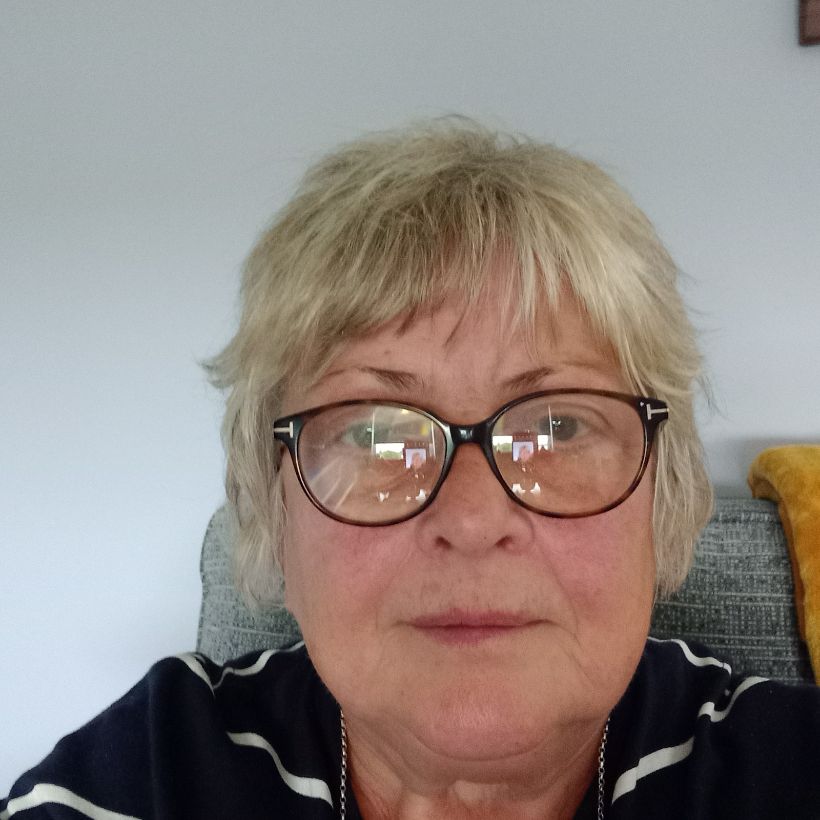
Catherine Costello was a civil servant at the DWP for 18 years. She had stopped working and received her last salary payment in February 2025 and was given six months’ early retirement through ill health from 1 August 2025.
Six months later, on 28 January, she finally received her lump sum. She then had to wait until 1 May for her first monthly pension payment.
During that wait, Catherine used up all of her savings to pay her bills, and eventually had to turn to her neighbour to be able to survive. She says this was “soul destroying”.
“Unfortunately, my husband died five years ago. I don't have a family that I can turn to and say, ‘I need money to pay this bill or that bill or to buy food.’ Fortunately, I've got a fantastic neighbour, and I don't know how I can ever thank them for what they did to help me out. I've paid back what I've owed them, but to think I've had to go to somebody's door and ask them to help me out financially. Never in all my life have I had to do that. I was so depressed. My neighbour was in and out of my house all the time because she was a bit worried about me.”
 Catherine Costello
Despite the trauma Catherine went through, she sees herself as one of the lucky ones, thanks to the determined efforts of her local MP Frank McNally who, having sent a letter to Capita in November to no avail, raised Catherine’s case in the House of Commons.
Catherine phoned Capita the following Monday and says the call handler told her the payment would be in her bank the next day. It arrived one week after McNally had raised her case in parliament.
“I couldn't thank him enough for what he did,” Catherine says about McNally’s efforts. “But you shouldn't have to go to an MP to get your money.”
When she finally received her pension she says it came with no information, and despite her efforts, including being held on one call for four and a half hours, she still hasn’t had any explanation.
“I've got my money now, but I don't know if it's right. I haven't a clue because I've got no paperwork to support it, to question it. It’s just been a total nightmare, but I see a wee bit of light at the end of the tunnel.”
Now, like many, she is waiting for compensation, which she has been told will take a few more months.
“I want compensation for the length of time it's taken, the money that I've had to borrow – I didn't just pay back my neighbour what I owed her, I bought her a lovely gift for being so nice – the worry, the stress it put me through, and then the interest.”
End of June pledge ‘feels fanciful’
Soon after the recovery plan was launched, Capita pledged it would hit standard contractual levels for all cases by the end of June.
But among civil service unions only Adrian Prandle, the assistant general secretary of the FDA union, which represents mid-ranking and senior civil servants, is even slightly positive that this pledge might be fulfilled. Speaking to CSW, he says he is “hopeful but not confident” of Capita meeting the target.
Angela Grant, DWP Group president at PCS, the civil service’s biggest union, told the union’s annual conference last month that the union has “little faith” in Capita hitting the deadline.
Worse still, Steve Thomas, deputy general secretary at Prospect, the union for specialist civil servants, says the service “feels like it’s getting worse rather than better”.
Thomas says Prospect has been supportive of the recovery plan and the prioritisation choices. But, he adds, “the longer this goes on, the more it feels that getting the service back to service levels by the end of June just feels completely fanciful, and highly unlikely to happen”.
As the taskforce focuses on priority cases, Thomas says the more day-to-day issues “are slipping and getting worse”.
Getting outstanding retirement quotes issued to members by the end of June – a promise that is emblazoned at the top of the Civil Service Pension Scheme website– is one of the biggest remaining challenges. As of 23 April, there were 23,000 quotations waiting to be processed. Getting them all done by the end of this month would mean processing 2,300 a week on average from 23 April to 30 June. Earlier this year, Capita was managing only around 400 per week, but by mid-May MacDonald said Capita had achieved 2,500 in one week.
Despite this progress, Prospect’s pension officer Neil Walsh says it looks unlikely the target will be achieved. He says the uncertainty is “blighting everyone's plans” and it would be better if Capita extended the deadline to a more realistic date.
“If they said, ‘we're 100% certain we'll get there in the middle of July,’ then that would be easier for members,” he says. “They'd know: ‘If I retire this year, I'm going to have to plan for a period of time when I'm retired and there's no pension being paid – I can cope with that and take that into account’.”
In the event that Capita does manage to reach service levels by the end of June, Walsh cautions that it would take until November for all pension scheme members to be getting their payment on time, as the normal process takes up to four months from the point of a quote being issued to a pension being paid.
MacDonald tells CSW that once quotes are issued, most first payments should come through in July or August, but acknowledges that for more complex cases Capita will need to back with further questions, delaying payments.
A Capita spokesperson said: “We continue to work with the Cabinet Office to establish normal service levels. Additional trained resource remains in place, and our focus is on ensuring members of the Civil Service Pension Scheme receive the service they expect and deserve. We are sorry for the worry and frustration these delays are causing.”
Putting off retirement: ‘The next stage of where this goes wrong’
An emerging worry among unions is the number of civil servants who are putting off retirement plans until the crisis is sorted.
Prandle warns that even when things start to get back on track, there will be a “heavy flow” of cases to deal with from those who have been waiting for the issues to pass.
According to Thomas, the crisis is having “real world impacts on people's decision making and their thoughts about retiring or partially retiring, and the confidence to be able to plan for that”.
“On an individual basis, that's hugely challenging and massively stressful, but also operationally, for departments, who are thinking about workforce planning and who's going to be retiring when.
“That has a really significant corrosive effect on trust in the process, as well as an operational impact on workforce planning.”
And Walsh says there could also be a major financial impact, as Prospect estimates thousands of people have “looked at this whole mess and said, even though I wanted to retire in April, I don't know what I'm going to get and I can't afford to take the risk that I'm going to be getting nothing for this long. That's a hugely significant loss to somebody to put off the next stage of their lives for months because the pension administrator can't do their job. And we would say that those members are entitled to compensation for it.”
Walsh says when you add those to the people who have been waiting months for payment “and are clearly entitled to compensation…you're looking at tens of thousands of people…[and] many tens of millions of pounds. Who's going to fund that…and who's going to process these tens of thousands of complaints?”
“That's probably the next stage of where this is going to go wrong”, Walsh says.
However, MacDonald tells CSW the historical trend of civil servants retiring at a rate of around 1,000 a week has not changed much.
“We know some people have withdrawn or deferred their application for retirement and we know how distressing and unacceptable that is – but overall, the volume of new quote requests has not changed significantly compared to what the usual trends would be,” she says. “We will of course ensure we are prepared for any change in that trend, but as things stand, we haven’t seen this happen.”
Looking beyond those currently close to retirement, Walsh says there is also an impact on mid-career officials due to there being no working retirement modeller since December.
‘A breath of fresh air’: Angela MacDonald
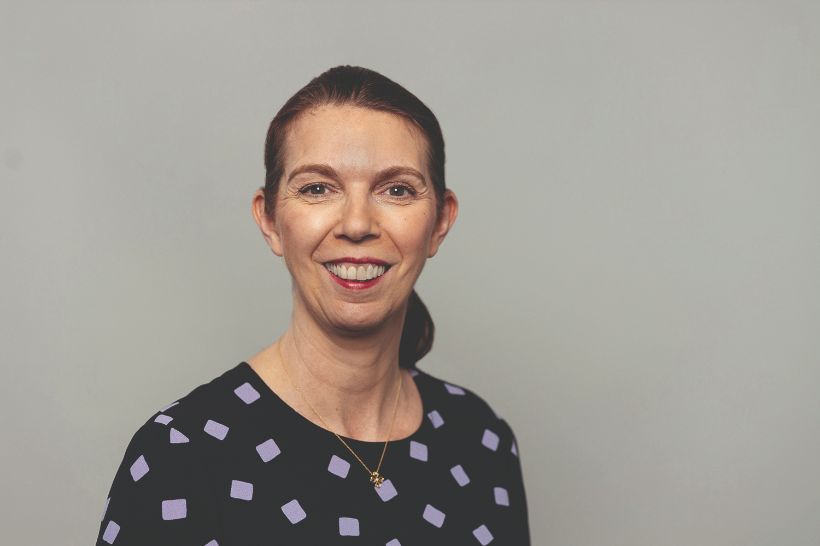
There remains much to do to turn around the scheme, but one thing seems clear from CSW’s conversations – the impact of MacDonald and her surge taskforce.
Thomas says MacDonald has done “a great job” and been “a real breath of fresh air to deal with”, while Prandle says he’d “hate to think what state the scheme would be in if [the taskforce] hadn't gone in and worked for Capita over the last few months".
With MacDonald retiring at the end of July, there are some concerns about that transition.
Tsoukaris says: “We are a bit concerned about what happens once she's no longer there.”
“You'd rather get through the rest of this year without that sort of change; she has made a very positive impact – but we have to respect her decision," Prandle adds.
 Angela MacDonald. Photo: GOV.UK
MacDonald tells CSW there is “lots of work going on to ensure we can sustain the effort into the long term and I’m confident we will do so”. She says she has been working closely with the Cabinet Office leadership team to ensure the right people and structures are firmly in place for the future, including the forthcoming appointment of a new permanent full-time operational director to take over from her.
As the end of June deadline draws closer, MacDonald says the recovery has helped thousands of members so far and she is “proud of all the efforts that have gone into achieving that”.
She says many parts of the scheme are working as they should – with around 730,000 pensioners remaining “firmly, consistently in payment” through the transition.
“But I know that is little comfort for thousands of people who are yet to get what they need,” MacDonald says. “The work will continue until that happens.”
“Even once the scheme does hit its recovery targets, we also recognise that it will take much longer to rebuild trust with members,” she adds. “This is ultimately about their experience – so we are going to have to deliver a strong experience for a long time in order to convince people that this is a service they can rely on.”